



ORGANS OF PARIS © 2026 Vincent Hildebrandt HOME ALL ORGANS



Saint-Christophe-de-Javel was built between 1926
and 1930 under the direction of the architect
Charles-Henri Besnard (1881-1946). It stands out as
the first "prefabricated" church in France, built with
elements of molded reinforced cement, a very
innovative process for the time, which allowed a
quick and inexpensive construction. This technique
made it possible to devote vast areas to wall and
glass decorations entrusted to great artists of the
early twentieth century. The church is marked by the
Art Deco style, especially in its clean lines and bright
volumes. Inside, murals and stained glass paintings
by Henri-Marcel Magne (1877-1944) and Jac Martin-
Ferrières (1893-1972) illustrate the legend of Saint
Christopher, but also evoke the industrial
development of the district, showing trains, planes
and automobiles, in homage to the nearby Citroën
factories and the working-class vocation of the area.
The choir vault and the brick and concrete façade,
adorned with a large statue of the Saint, are perfect
examples of this dialogue between tradition and
modernity specific to Art Deco. This monument
embodies both the industrial heritage of the Javel
district and the architectural opening of Paris in the
1930s towards modernity. The choice of Art Deco
reflects the desire to celebrate progress, while
renewing the sacred artistic language, which makes
this church a unique testimony to Parisian heritage.
Source
St Christophe de Javel is also known for its choir,
created in 1955 by organist Claude Sommer. It was
successively conducted by many well-known
choirmasters (Henri Chalet, Gérald de Montmarin).

D2
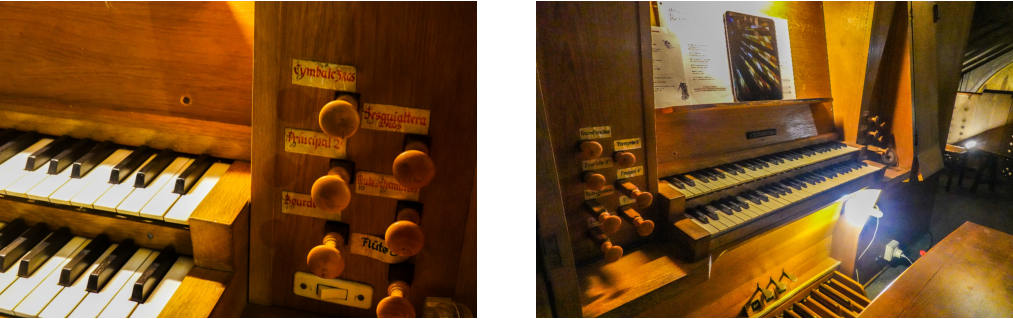
Originally, the church was equipped with a small
Cavaillé‑Mutin organ, which had been Jean Huré’s former
salon organ. It was built in the period 1915–1920.
In 1970, it was rebuilt by the firm Schwenkdel from
Strasbourg‑Kœnigshoffen. The windchests of the Great
Organ and Récit were replaced (the pedal windchest came
from the Mutin organ), the action was completely rebuilt,
and the pipework (largely taken from the Mutin organ) was
re‑tuned. The voicing was carried out by the Steinmetz
brothers.










The organs of Paris


ORGANS OF PARIS © 2026 Vincent Hildebrandt
D2
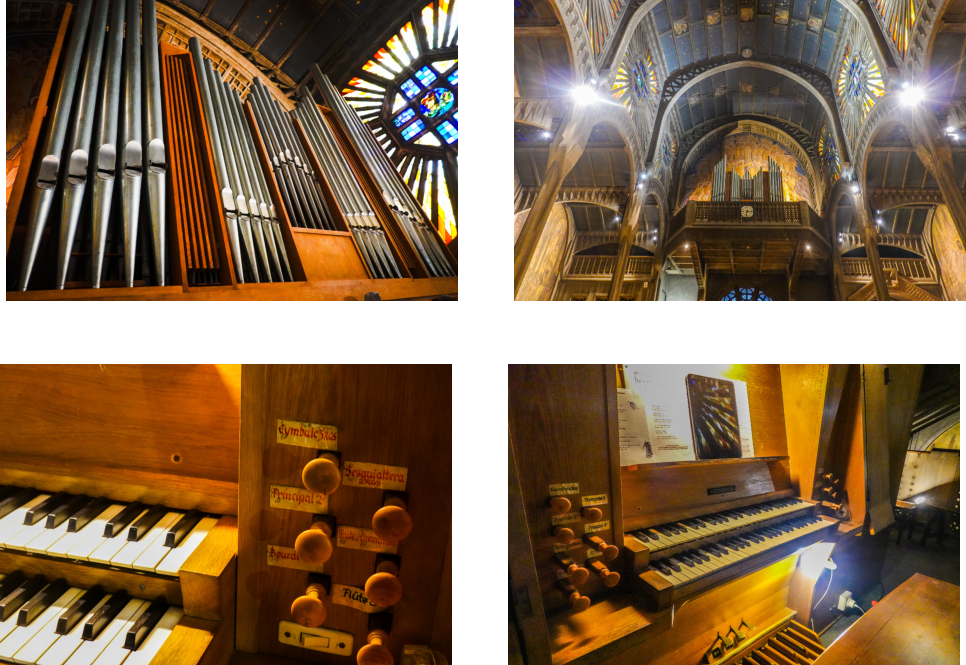
Originally, the church was equipped with a small
Cavaillé‑Mutin organ, which had been Jean Huré’s former
salon organ. It was built in the period 1915–1920.
In 1970, it was rebuilt by the firm Schwenkdel from
Strasbourg‑Kœnigshoffen. The windchests of the Great
Organ and Récit were replaced (the pedal windchest came
from the Mutin organ), the action was completely rebuilt,
and the pipework (largely taken from the Mutin organ) was
re‑tuned. The voicing was carried out by the Steinmetz
brothers.